
General Science
Human body
पडताळलेले उत्तर (Verified)
MPSC सराव प्रश्न:
खालीलपैकी कोणती पायरी श्वासोच्छ्वास प्रक्रियेतील नाही?
Which one of the following is not an intermediate step in Respiration?
पर्याय (Options):
A
ग्लुकोज → ग्लुकोज-6-फॉस्फेट
B
अचूक उत्तर (Official Answer)
फ्रुक्टोस 1-6 डायफॉस्फेट → फ्रुक्टोस-6-फॉस्फेट
C
फ्रुक्टोस-6-फॉस्फेट → फ्रुक्टोस 1,6-फॉस्फेट
D
1-3 डाय पिजीए → 3पिजीए
सविस्तर स्पष्टीकरण (Detailed Explanation):
अचूक उत्तर: पर्याय (2)
योग्य उत्तर फ्रुक्टोस 1-6 डायफॉस्फेट → फ्रुक्टोस-6-फॉस्फेट आहे.
संकल्पना:
• श्वासोच्छ्वास ही एक अम्फीबोलिक (अपचय व उपचय) आणि बहिःऊर्ज पेशीय अभिक्रिया आहे.
• श्वासोच्छ्वास हे दोन प्रकारचे असते.
• ऑक्सिश्वसन- ऑक्सिजनच्या वापरासह. उदा. वनस्पती
• विनॉक्सीश्वसन- ऑक्सिजनचा वापर न करता. उदा. किण्व
• ऑक्सिश्वासोच्छवासाच्या पायऱ्या- ग्लायकोअपघटन (ग्लायकोलिसिस), केब्स चक्र, इलेक्ट्रॉन परिवहन संस्था (ETS).
स्पष्टीकरण आणि महत्त्वाचे मुद्दे:
पेशीय श्वासोच्छवासाच्या अभिक्रियांचे तीन मुख्य चरण आणि मध्यवर्ती चरणांमध्ये वर्गीकरण केले जाऊ शकते:
• ग्लायकोअपघटन (ग्लायकोलिसिस),पायरुव्हेटचे रूपांतरण,
• ऑक्सिजनच्या अनुपस्थितीत, पायरुव्हिक आम्लाचे विनॉक्सी श्वसन होईल जे इथेनॉल, कार्बन डायऑक्साइड आणि ऊर्जेमध्ये रूपांतरित होते.
• केब्स चक्र (यास साइट्रिक आम्ल चक्र म्हणूनही ओळखले जाते)
• सर्व जिवंत पेशींचे एक महत्त्वाचे वैशिष्ट्य म्हणजे श्वासोच्छ्वास जो ॲडेनोसिन ट्रायफॉस्फेट (ATP) म्हणून चयापचय ऊर्जेच्या मुक्ततेशी संबंधित आहे.
• ऑक्सिडी फॉस्फोरिलन.
• ऑक्सिडी फॉस्फोरिलनमध्ये दोन भाग असतात: इलेक्ट्रॉन परिवहन संस्था आणि केमिओस्मोसिस (आयनांचे परासरण)
• हा अंतिम टप्पा आहे जो श्वासोच्छवासाच्या प्रक्रियेत मोठ्या प्रमाणात ATP तयार करतो.
• फ्रुक्टोस-6-फॉस्फेट चे रूपांतर फ्रुक्टोस 1,6-फॉस्फेट मध्ये केले जाते आणि या उलट नाही म्हणून पर्याय 2 अयोग्य आहे.
पूरक माहिती:
• फ्रूक्टोज बायफॉस्फटेज हे एक विकर आहे जे ग्लुकोजनवजनन (ग्लुकोनिओजेनेसिस) आणि कॅल्विन चक्रमध्ये फ्रूक्टोज-1,6-बायस्फॉस्फेटचे फ्रूक्टोज 6-फॉस्फेटमध्ये रूपांतरित करते जे दोन्ही उपचयी (अॅनाबॉलिक) मार्ग आहेत.
• वनस्पतींमध्ये, हे ग्लुकोज संचयित कर्बोदकांपासून किंवा सुक्रोजपासून, जे प्रकाशसंश्लेषणाचे अंतिम उत्पादित आहे, पासून प्राप्त होते.
• सुक्रोजचे रूपांतर ग्लुकोज आणि फ्रूक्टोजमध्ये इन्वर्टेज विकर द्वारे केले जाते आणि हे दोन मोनोसॅकराइड सहजपणे ग्लायकोअपघटन मार्गमध्ये प्रवेश करतात.
• ग्लुकोज आणि फ्रुक्टोज हेक्सोकिनेज विकरांच्या क्रियांमुळे ग्लुकोज-6-फॉस्फेटच्या निर्मितीसाठी विकरीफॉस्फेटन करतात.
• ग्लुकोजचे हे विकरीफॉस्फेटन रूप (फॉस्फोरिलेटेड फॉर्म) नंतर फ्रूक्टोज-6-फॉस्फेट तयार करण्यासाठी समघटकांतरीत होते.
• ग्लुकोज आणि फ्रूक्टोजच्या चयापचयाच्या पुढील चरण समान आहेत.
स्पष्टीकरण आकृती (Solution Visual Diagram):

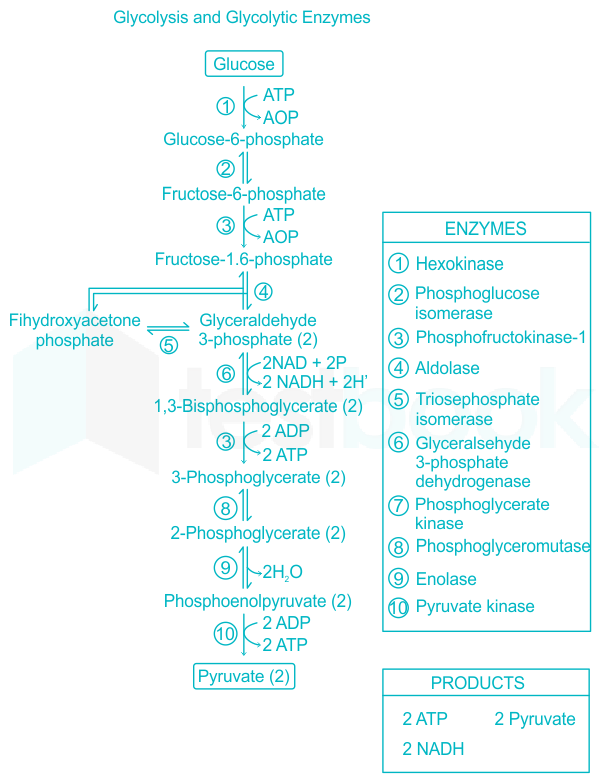

Solution Diagram