
General Science
Botany
पडताळलेले उत्तर (Verified)
MPSC सराव प्रश्न:
खालीलपैकी कोणत्या उतींमध्ये मृतपेशी असतात?
Which of the following tissues has dead cells?
पर्याय (Options):
A
अचूक उत्तर (Official Answer)
दृढोतक
B
स्थूलकोनोतक
C
उपकला उती
D
मुलोतक
सविस्तर स्पष्टीकरण (Detailed Explanation):
अचूक उत्तर: पर्याय (1)
संकल्पना:
स्थायी उती:
• स्थायी उती अशा परिपक्व उतींच्या बनलेल्या असतात ज्यांनी त्यांची विभाजित होण्याची क्षमता गमावली आहे आणि विविध कामांचे निश्चित स्वरूप प्राप्त केले आहे.
• स्थायी ऊती ह्या साध्या ऊती आणि जटिल उती असतात.
• जर स्थायी ऊती समान प्रकारच्या पेशींनी बनलेल्या असतील तर त्यांना साध्या ऊती म्हणतात.
• जर स्थायी ऊती एक किंवा अधिक प्रकारच्या पेशींनी बनलेल्या असतील तर त्यांना जटिल ऊती म्हणतात.
• जलवाहिन्या आणि रसवाहिन्या ह्या स्थायी जटिल ऊती आहेत.
• मुलोतक, दृढोतक आणि स्थूलकोनोतक ह्या साध्या स्थायी वनस्पती ऊती आहेत.
• दृढोतक: उंच वनस्पतींमध्ये उतींना आधार देणारी.
• मुलोतक: पाने, फुले व फळांमध्ये बहुतेक पेशी बनतात.
• स्थूलकोनोतक: आधार, रचना, तणावपूर्ण शक्ती आणि लवचिकता प्रदान करते जे वनस्पतीला वाकण्यास मदत करते.
स्पष्टीकरणः
दृढोतक:
• ह्या साध्या स्थायी वनस्पती ऊती आहेत.
• ह्या वनस्पतींना यांत्रिक कडकपणा आणि सामर्थ्य प्रदान करतात.
• ह्या मृत पेशी म्हणजेच निर्जीव किंवा मृत पेशीनी बनलेल्या असतात.
स्थूलकोनोतक:
• स्थूलकोनोतक ऊती असमान प्राथमिक जाड भिंतींच्या लांबलचक सजीव पेशींच्या बनलेल्या असतात, ज्यामध्ये हेमिसेल्युलोज, सेल्युलोज आणि पेक्टिक सामग्री असते.
• हे तुटलेली पाने, पानांच्या नसा आणि तरूण वनस्पतींचे खोड यांना आधार, रचना, यांत्रिक सामर्थ्य आणि लवचिकता प्रदान करते, ज्यामुळे न तुटता सहज वाकणे शक्य होते.
मुलोतक:
• ह्या सजीव बहुभुज पेशी आहेत ज्यात मध्यवर्ती रिक्तिका आणि अंतराकोशिकी पोकळी आहेत.
• मुलोतक पेशी आधार निकाष्ठ आणि उती तयार करण्यास जबाबदार असतात.
• यामध्ये हरितलवकांचा समावेश आहे आणि म्हणूनच याला हरितकणोतक असे म्हणतात आणि प्रकाश संश्लेषणात ते मदत करते.
विभाजी उती:
• वनस्पतींच्या वाढत्या भागांना विभज्या किंवा विभाजी उती म्हणतात.
• विभाजी उतीमध्ये पेशी विभाजनाची क्षमता असते.
• त्या गोल, अंडाकृती आणि बहुभुज असतात.
• त्या वनस्पतींचे वेगवेगळे भाग वाढवतात आणि त्यांचे गठन कतात.
तीन प्रकारच्या विभाजी उती आहेत-
• अग्रविभाजी उती- ह्या डिकशी आणि मुळांच्या टोकावर असतात.
• मध्यविभाजी उती- पानांच्या तळाशी आणि गाठीवर, स्थायी उतींमध्ये स्थित.
• पार्श्वविभाजी उती- बाजू (कडा) वर स्थित.
स्पष्टीकरण आकृती (Solution Visual Diagram):
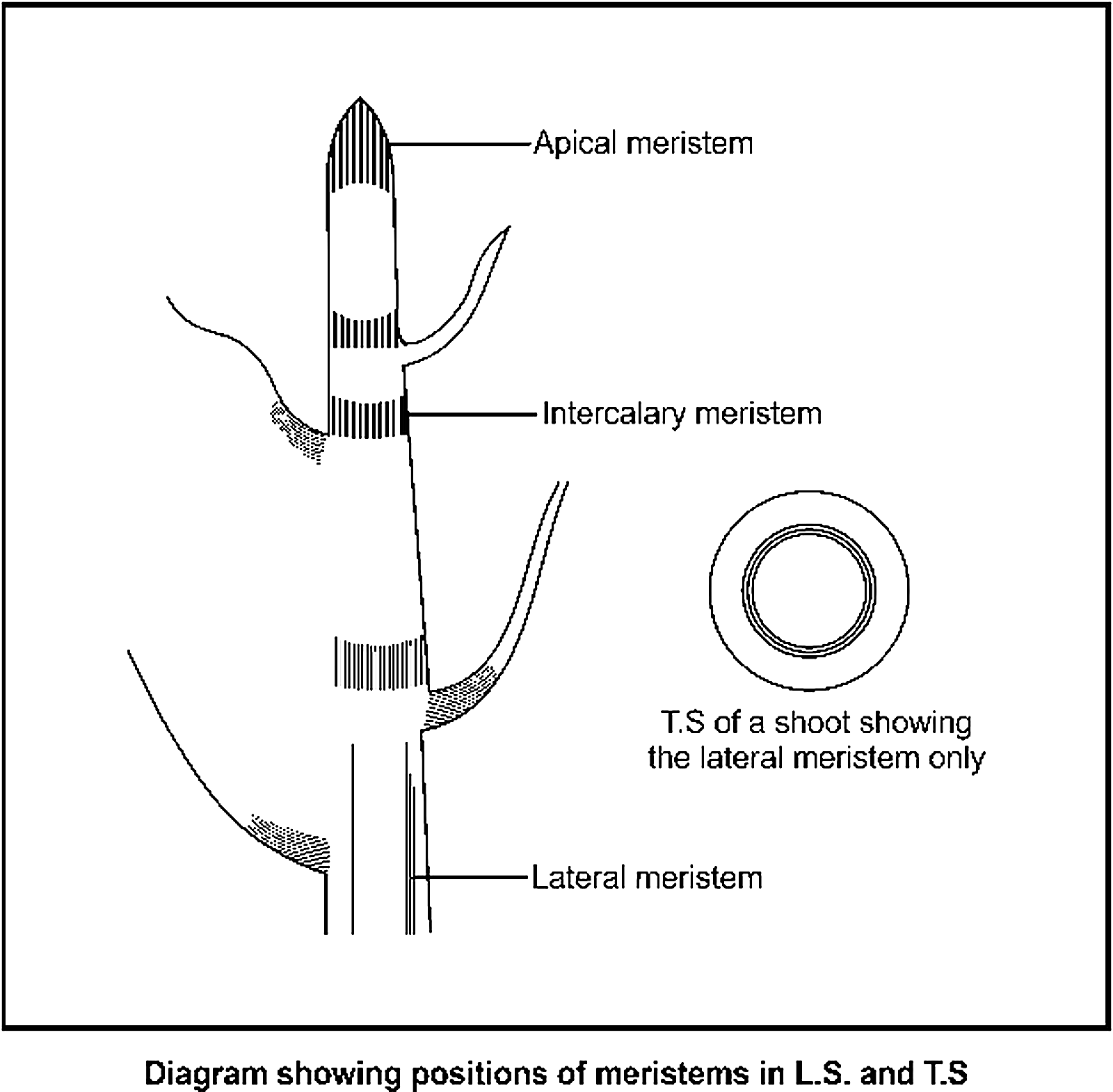
Solution Diagram