History
National movement (1885 - 1919)
पडताळलेले उत्तर (Verified)
MPSC सराव प्रश्न:
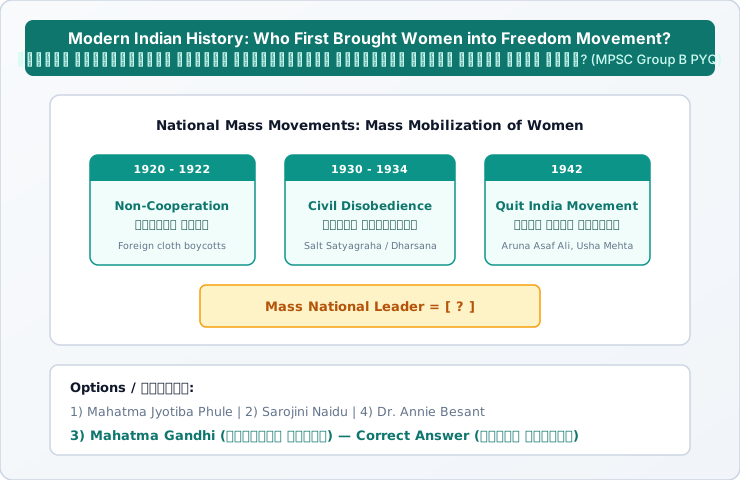
भारतीय स्वातंत्र्य चळवळीत स्त्रियांना आणण्याचे कार्य प्रथम पुढीलपैकी कोणी केले?
Who from the following was the first to bring women in the freedom movement?
प्रश्न आकृती (Question Diagram):
पर्याय (Options):
A
महात्मा ज्योतीबा फुले
B
सरोजिनी नायडू
C
अचूक उत्तर (Official Answer)
महात्मा गांधी
D
डॉ. ॲनी बेझंट
सविस्तर स्पष्टीकरण (Detailed Explanation):
अचूक उत्तर: पर्याय (3)
बरोबर उत्तर महात्मा गांधी महत्त्वाचे मुद्दे:
• भारतीय स्वातंत्र्य चळवळीत लढलेल्या सर्वांचा महिलांच्या सहभागावर प्रभाव होता.
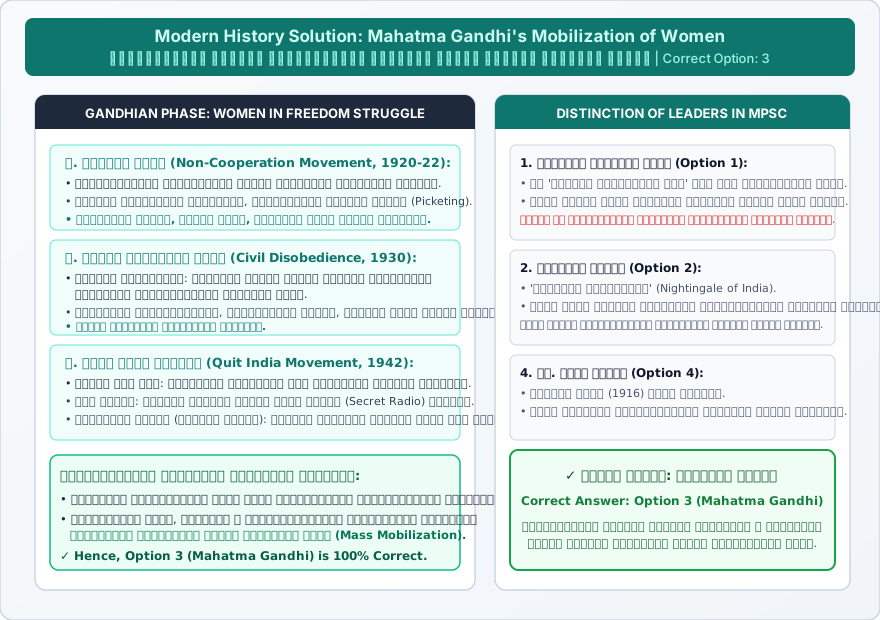
• तथापि, स्त्रियांना अधिक व्यापकपणे सहभागी करून घेण्यात एक प्रमुख व्यक्ती म्हणजे महात्मा गांधी.
• त्याच्या अहिंसक निषेध आणि बहिष्कारांनी विशेषतः 20 व्या शतकाच्या सुरुवातीस चळवळीचे जन आवाहन मोठ्या प्रमाणात वाढवले आणि महिलांसह सर्व सामाजिक स्थानांतील लोकांना या कारणासाठी आणले.
• गांधींनी स्त्रियांना केवळ माता किंवा पत्नी म्हणून पाहिले नाही तर स्वातंत्र्याच्या लढ्यात समान भागीदार म्हणून पाहिले.
• त्यांचा असा विश्वास होता की स्त्रियांमध्ये अहिंसेची नैसर्गिक क्षमता आहे आणि त्यांनी असहकार चळवळ (1920-22), सविनय कायदेभंग चळवळ (1930-34) आणि छोडो यांसारख्या राष्ट्रवादी संघर्षांना पाठिंबा मिळविण्यासाठी या क्षमतेचे आवाहन केले. भारत चळवळ (1942). या चळवळींमध्ये स्त्रिया समोर आल्या, निदर्शनांमध्ये सहभागी होऊन नेतृत्व केले, विदेशी वस्तू विकणारी दुकाने काढली आणि तुरुंगवास भोगला.
• मोहनदास करमचंद गांधी यांचा जन्म २ ऑक्टोबर १८६९ रोजी पोरबंदर येथे झाला.
• ते वकील, वसाहतविरोधी राष्ट्रवादी आणि राजकीय नीतिशास्त्री होते.
• ब्रिटीश राजवटीपासून देशाच्या स्वातंत्र्यासाठी त्यांनी अहिंसक चळवळीचे नेतृत्व केले. भारताच्या स्वातंत्र्यासाठी प्रमुख चळवळी –
• पहिल्या महायुद्धात युद्धाच्या प्रयत्नांसाठी भारतीयांची भरती
• चंपारण आंदोलन – बिहारमध्ये १९१७
• खेडा आंदोलन – १९१८
• खिलाफत चळवळ - १९१९
• असहकार चळवळ - 1920
• दांडी मार्च (मीठ सत्याग्रह) - 1930
• गोलमेज परिषद – १९३१-३२
• भारत छोडो आंदोलन – १९४२
• स्वातंत्र्य आणि विभाजन - 1947 अतिरिक्त माहिती:
• समर्पित स्मारके – राज घाट, गांधी स्मृती
• नागरिकत्व - ब्रिटिश राज (1869 - 1947), भारतीय (1947 - 1948)
• मृत्यू – ३० जानेवारी १९४८ (नथुराम गोडसेची हत्या)
• आत्मचरित्र - सत्यासह माझ्या प्रयोगांची कथा चूक गुण
• दक्षिण आफ्रिकेत 1914 मध्ये महात्मा यांना गांधीजी ही पदवी देण्यात आली होती.
(बापूंच्या सन्मानार्थ जारी केलेले तिकीट)
सरोजिनी नायडू:
• भारतीय राष्ट्रीय काँग्रेसच्या त्या पहिल्या भारतीय महिला अध्यक्षा होत्या.
• 1925 मध्ये कानपूरच्या अधिवेशनात त्या भारतीय राष्ट्रीय काँग्रेसच्या अध्यक्षा झाल्या .
• कविता लेखनाच्या क्षेत्रातील योगदानाबद्दल तिला "नाइटिंगेल ऑफ इंडिया" ही पदवी देण्यात आली.
• तिला बोलावलं होतं'भारत कोकिळा'.
• भारताच्या वर्चस्वात राज्यपालपद भूषवणाऱ्या त्या पहिल्या महिला आहेत.
• 1947 मध्ये त्या संयुक्त प्रांताच्या गव्हर्नर झाल्या
• सरोजिनी नायडू यांची उल्लेखनीय कामे आहेत:
• सोन्याचा उंबरठा
• काळाचा पक्षी: जीवन, मृत्यू आणि वसंताची गाणी
• मुहम्मद जिना: एकतेचे राजदूत
• पालखी वाहक
• गावाकडचे गाणे
स्पष्टीकरण आकृती (Solution Visual Diagram):