Geography
Origin and evolution of Universe Solar system
पडताळलेले उत्तर (Verified)
MPSC सराव प्रश्न:
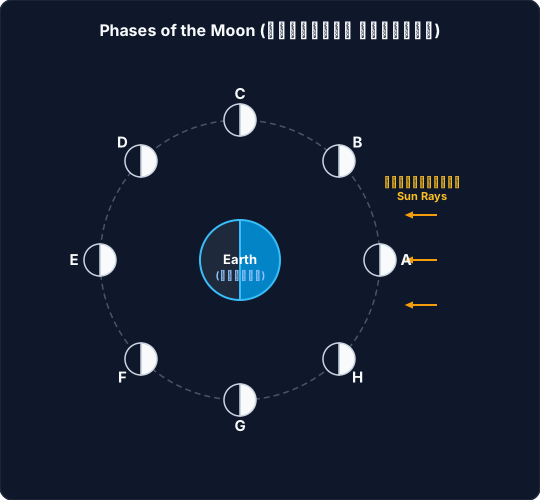
खालील आकृतीचे निरीक्षण करून खालीलपैकी कोणत्या मूळाक्षरांनी चंद्राचा तीन चतुर्थांश भाग प्रकाशित दर्शविला आहे हे नमूद करा ?
Observe the following diagram and state which of the following alphabets indicate the gibbous phase of the moon.
प्रश्न आकृती (Question Diagram):
पर्याय (Options):
A
B आणि H
B
C आणि G
C
अचूक उत्तर (Official Answer)
D आणि F
D
E आणि A
सविस्तर स्पष्टीकरण (Detailed Explanation):
अचूक उत्तर: पर्याय (3)
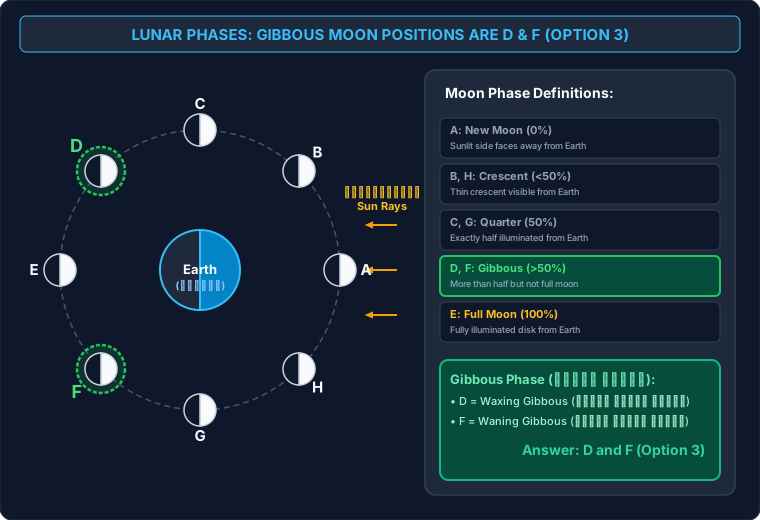
योग्य उत्तर D आणि F आहे.
स्पष्टीकरण आणि महत्त्वाचे मुद्दे:
चंद्राच्या कला
• पृथ्वीभोवती प्रदक्षिणा घालताना चंद्र विविध कलांतून जातो. या कला चंद्र, पृथ्वी आणि सूर्याच्या बदलत्या स्थितींमुळे उद्भवतात. चंद्राच्या मुख्य कलांमध्ये पुढील बाबी समाविष्ट असतात:
• नवीन चंद्र:
• नवीन चंद्र टप्प्यात, चंद्र हा पृथ्वी आणि सूर्य यांच्यामध्ये स्थित असतो. पृथ्वीच्या दृष्टीकोनातून, आपल्यासमोरील चंद्राची बाजू पूर्णपणे गडद आणि काळ्या बिंबाच्या रूपात दिसते.
• चंद्राची प्रकाशित बाजू आपल्यापासून दूर असल्यामुळे हा टप्पा पृथ्वीवरून दिसत नाही.
• वाढती (वॅक्सिंग) चंद्रकोर:
• चंद्र आपली प्रदक्षिणा सुरू ठेवत असताना प्रकाशमान बाजूचा एक छोटासा भाग पृथ्वीवरून दिसतो. याला वाढती (वॅक्सिंग) चंद्रकोर म्हणून ओळखले जाते.
• हे चंद्राच्या उजव्या बाजूला एक लहान, चंद्रकोर-आकाराच्या स्लिव्हरसारखे दिसते, उर्वरित चंद्र अजूनही छायेखाली असतो.
• प्रथम चतुर्थांश:
• जेव्हा चंद्राची निम्मी प्रकाशित बाजू दिसते, तेव्हा त्याला प्रथम चतुर्थांश म्हणतात.
• या टप्प्यात, चंद्र अर्धवर्तुळाप्रमाणे दिसतो, उजवा अर्धा भाग प्रकाशित आणि डावा अर्धा भाग छायेखाली असतो.
• वाढती फुगिरता (वॅक्सिंग गिबस):
• जसजसा चंद्र त्याच्या कक्षेत पुढे जातो तसतशी त्याची अधिक प्रकाशित बाजू दिसू लागते. जेव्हा चंद्र निम्म्याहून अधिक प्रकाशित होतो परंतु अद्याप पौर्णिमेपर्यंत पोहोचलेला नसताे तेव्हा वाढती फुगिरता टप्पा होतो.
• डाव्या बाजूला छायेखाली एक लहान भाग असलेली एक मोठी, प्रकाशित बिंब दिसते.
• पौर्णिमा:
• जेव्हा चंद्र सूर्यापासून पृथ्वीच्या विरुद्ध बाजूला असतो आणि त्याची संपूर्ण प्रकाशित बाजू पृथ्वीवरून दिसते तेव्हा पौर्णिमेचा टप्पा तेव्हा होतो.
• हे संपूर्ण, गोल बिंब म्हणून दिसते आणि बहुतेक वेळा चंद्राचा सर्वात तेजस्वी आणि सर्वात ओळखण्यायोग्य टप्पा म्हणून ओळखला जातो.
• घटती फुगिरता (वानिंग गिबस):
• पौर्णिमेनंतर, चंद्र पुन्हा अमावस्येकडे जाऊ लागतो.
• जेव्हा चंद्राची निम्म्याहून अधिक प्रकाशित बाजू अजूनही दृश्यमान असते, परंतु कमी होत असते तेव्हा घटती फुगिरता टप्पा होतो. उजव्या बाजूला छायेखाली एक लहान भाग असलेली एक मोठी, प्रकाशित बिंबासारखी दिसते.
• तृतीय चतुर्थांश:
• जेव्हा चंद्राची अर्धी प्रकाशित बाजू पुन्हा प्रकाशित होते, परंतु डाव्या बाजूला, ती तृतीय चतुर्थांश म्हणून ओळखली जाते.
• हे दृश्य प्रथम चतुर्थांश टप्प्यासारखेच असते, चंद्राचा डावा निम्मा भाग प्रकाशित असतो आणि उजवा निम्मा भाग छायेखाली असतो.
• घटती (वानिंग) चंद्रकोर:
• चंद्र अमावस्या अवस्थेच्या जवळ येत असताना घटती चंद्रकोर टप्पा येतो.
• चंद्राच्या डाव्या बाजूला फक्त एक लहान, अर्धचंद्राकृती स्लिव्हर प्रकाशित असते, बाकीचे छायेखाली असतात.
• आणि मग चक्राची, नवीन चंद्र कलासह पुनरावृत्ती होते, अशाप्रकारे चंद्र चक्र पूर्ण करते.
स्पष्टीकरण आकृती (Solution Visual Diagram):