Geography
Location(s)
पडताळलेले उत्तर (Verified)
MPSC सराव प्रश्न:
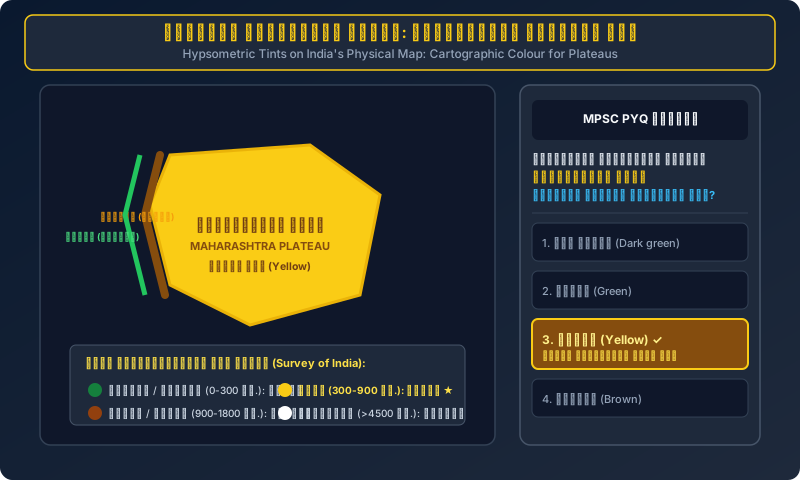
भारताच्या प्राकृतिक नकाशात महाराष्ट्र पठार खालीलपैकी कोणत्या रंगाने दर्शविले आहे ?
In the physical map of India, Maharashtra plateau is shown by which of the following colours?
प्रश्न आकृती (Question Diagram):
पर्याय (Options):
A
गडद हिरवा
B
हिरवा
C
अचूक उत्तर (Official Answer)
पिवळा
D
तपकिरी
सविस्तर स्पष्टीकरण (Detailed Explanation):
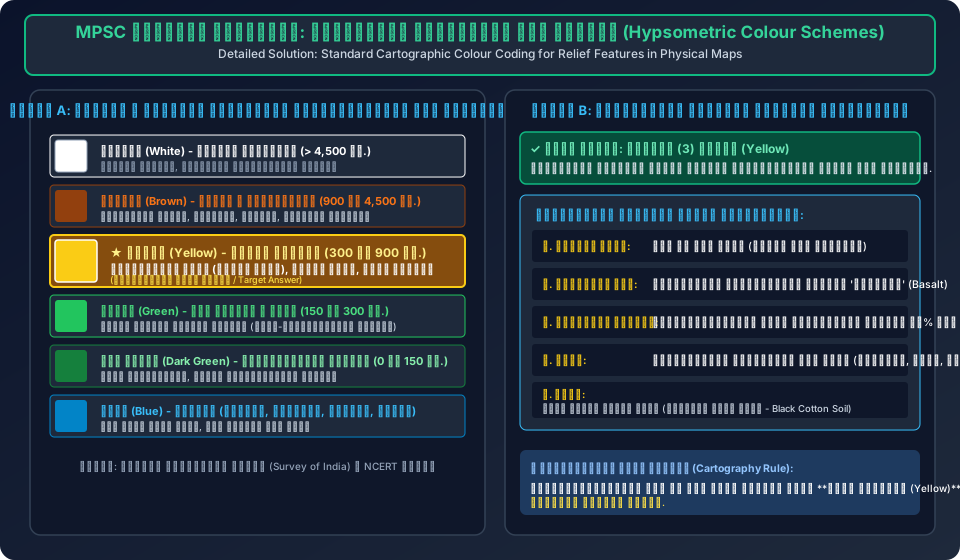
अचूक उत्तर: पर्याय (3)
योग्य उत्तर पिवळा आहे.
स्पष्टीकरण आणि महत्त्वाचे मुद्दे:
महाराष्ट्र पठार:
• महाराष्ट्र पठार, ज्याला दख्खनचे पठार असेही म्हणतात, भारताच्या भौतिक नकाशांवर पिवळा रंग वापरून चित्रित केले आहे.
• महाराष्ट्र पठार हा भारताच्या पश्चिम आणि मध्य भागात असलेला एक मोठा भारदस्त प्रदेश आहे, ज्याने महाराष्ट्र राज्याचा बहुतांश भाग व्यापला आहे.
• हे पश्चिमेला पश्चिम घाट आणि पूर्वेला पूर्व घाट यांनी वेढलेले आहे, ज्यामुळे त्रिकोणी आकाराचे पठार तयार होते.
• पठाराचे वैशिष्ट्य म्हणजे हलके फिरणारे भूभाग आणि "टेबललँड्स" म्हणून ओळखल्या जाणार्या सपाट टेकड्या.
• हे लाखो वर्षांपूर्वी झालेल्या ज्वालामुखीच्या क्रियेमुळे तयार होते, परिणामी बेसाल्ट खडकांची निर्मिती होते.
• महाराष्ट्राचे पठार हे खनिजांनी समृद्ध आहे आणि त्याच्या विस्तीर्ण लाव्हा प्रवाहासाठी ओळखले जाते, ज्याने या प्रदेशातील सुपीक मातीत योगदान दिले आहे.
• हे पठार गोदावरी, कृष्णा आणि तापीसह अनेक प्रमुख नद्यांनी ओलांडले आहे, ज्यांनी क्षेत्राच्या कृषी विकासात महत्त्वपूर्ण भूमिका बजावली आहे.
• महाराष्ट्राच्या पठारावर मुंबई, पुणे, नागपूर आणि नाशिकसह अनेक प्रमुख शहरे आहेत, जी या प्रदेशातील महत्त्वाची आर्थिक आणि सांस्कृतिक केंद्रे आहेत.
• भौतिक नकाशांवर महाराष्ट्राच्या पठाराचे प्रतिनिधित्व करण्यासाठी वापरला जाणारा पिवळा रंग त्याला इतर भौगोलिक वैशिष्ट्यांपासून वेगळे करण्यात मदत करतो आणि भारतातील महत्त्वपूर्ण भूस्वरूप म्हणून त्याचे वेगळेपण ठळक करतो.
स्पष्टीकरण आकृती (Solution Visual Diagram):