
Geography
Geomorphology
पडताळलेले उत्तर (Verified)
MPSC सराव प्रश्न:
ज्वालामुखीय विस्फोटाने तयार केलेल्या 'रिलिफ फीचर्स' च्या खालील आकडेवारीमधून योग्य पर्याय निवडा : +-------------------------+----------------+----------------+----------------+ | a | b | c | d | +-------------------------+----------------+----------------+----------------+ | (1) आम्ल लावा कोन | मिश्र कोन | सिंडर कोन | बेसिक लावा कोन | | (2) बेसिक लावा शंकू कोन | सिंडर कोन | मिश्र कोन | आम्ल लावा कोन | | (3)आम्ल लावा कोन | बेसिक लावा कोन | सिंडर कोन | मिश्र कोन | | (4) सिंडर कोन | आम्ल लावा कोन | बेसिक लावा कोन | मिश्र कोन | +-------------------------+----------------+----------------+----------------+
Select the proper option from the following figures of 'Relief Features' created by volcanic eruption : +---------------------+-----------------+-----------------+-----------------+ | a | b | c | d | +---------------------+-----------------+-----------------+-----------------+ | (1) Acid Lava Cone | Mixed Cone | Cinder Cone | Basic Lava Cone | | (2) Basic Lava Cone | Cinder Cone | Mixed Cone | Acid Lava Cone | | (3) Acid Lava Cone | Basic Lava Cone | Cinder Cone | Mixed Cone | | (4) Cinder Cone | Acid Lava Cone | Basic Lava Cone | Mixed Cone | +---------------------+-----------------+-----------------+-----------------+
प्रश्न आकृती (Question Diagram):

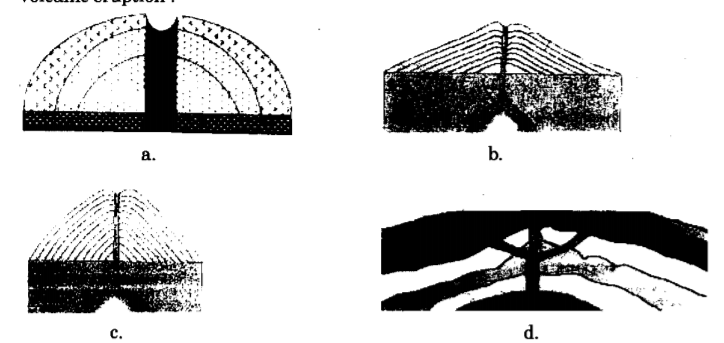

पर्याय (Options):
A
a
B
b
C
अचूक उत्तर (Official Answer)
c
D
d
सविस्तर स्पष्टीकरण (Detailed Explanation):
अचूक उत्तर: पर्याय (3)
योग्य उत्तर c आहे.
स्पष्टीकरण आणि महत्त्वाचे मुद्दे:
• आम्ल लावा कोन, बेसिक लावा कोन, सिंडर कोन, मिश्र कोन ही ज्वालामुखी फुटल्यामुळे तयार झालेली वैशिष्ट्ये आहेत.
महत्त्वाची टीप:
• सिंडर कोन ज्वालामुखी
• सिंडर बाह्य आग्नेय खडक आहेत.
• सिंडरचे अधिक आधुनिक नाव आहे स्कोरिया.
• हे छोटे ज्वालामुखी आहेत .
• या ज्वालामुखींमध्ये जवळजवळ संपूर्ण सैल, दाणेदार दंड आणि जवळजवळ लावा नसलेले पदार्थ असतात.
• त्यांच्या बाजू फार उंच आहेत आणि त्यांच्यात सामान्यतः वर एक लहान खड्डा असतो.
• संमिश्र ज्वालामुखी (मिश्रित कोन)
• शंकूच्या आकाराचे मध्यम स्वरूपाच्या आणि कधीकधी त्यांच्या कळसांमध्ये लहान क्रेटर (खड्डे) असतात.
• ज्वालामुखीशास्त्रज्ञ यास “स्ट्रॅटो-” किंवा संयुक्त ज्वालामुखी म्हणतात. कारण त्यामध्ये वाळूच्या थरांमध्ये किंवा लाकडासारख्या ज्वालामुखीच्या खडकात मिसळलेल्या सॉलिड लावाच्या थरांचा समावेश असतो, ज्याला सिंडर्स किंवा ज्वालामुखीची राख म्हणतात.
• बेसाल्टपेक्षा कूलर आणि अधिक चिकट लाव्हाचे विस्फोट हे त्यांचे वैशिष्ट्य आहे.
• या ज्वालामुखीमुळे बर्याचदा स्फोट होतात.
• लाव्हाबरोबर मोठ्या प्रमाणात पायरोक्लास्टिक साहित्य आणि राख जमिनीवर पोहोचतात.
• ही सामग्री व्हेंट ओपनिंगच्या आसपासच्या भागात जमा होते आणि थर तयार होण्यास कारणीभूत ठरते आणि यामुळे माउंट संमिश्र ज्वालामुखी म्हणून दिसून येते.
• शील्ड प्रकार ज्वालामुखी (मूलभूत लावा कोन)
• आपण ढाल ज्वालामुखीच्या वरच्या भागावर उड्डाण करत असाल तर ते योद्धाच्या ढालीसारखेच आहे, म्हणूनच त्याचे नाव शील्ड ज्वालामुखी.
• हवाईयन ज्वालामुखी ही सर्वात परिचित उदाहरणे आहेत.
• हे ज्वालामुखी बहुधा बेसाल्टिक लावा (अत्यंत द्रवपदार्थाने बनलेले) बनलेले असतात.
• हे ज्वालामुखी बहुधा बेसाल्ट (कमी चिकट) बनलेले असतात, हा एक प्रकारचा लावा असतो जो ज्वालामुखी खडे नसतात तेव्हा एकदम द्रव होतो.
• शील्ड ज्वालामुखींमध्ये कमी उतार असतात आणि जवळजवळ संपूर्ण गोठवलेल्या लाव्हा असतात.
• जर काहीसे पाणी व्हेंटमध्ये गेले तर ते स्फोटक बनतात; अन्यथा ते कमी स्फोटक आहेत.