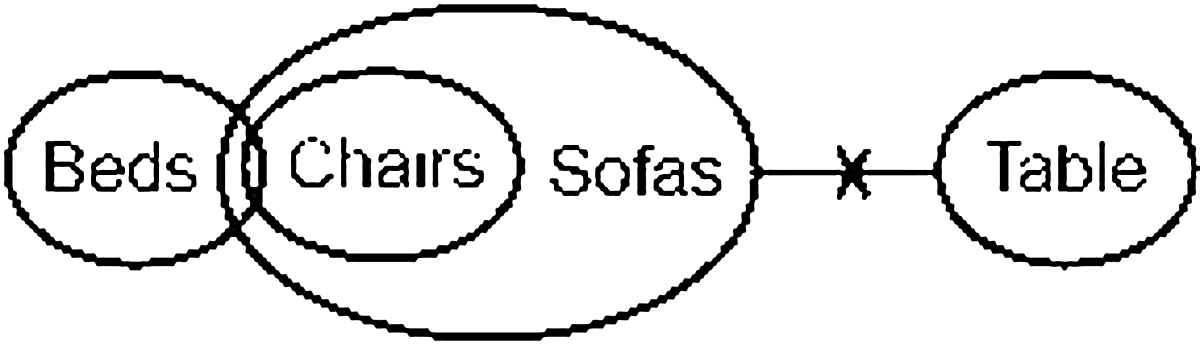
१. तार्किक नियम किंवा संबंध: सर्व खुर्च्या सोफ्यांच्या समूहात येतात. खुर्च्यांपैकी काही बेड आहेत. तसेच, सोफा आणि टेबल यांच्यात कोणताही समान घटक नाही. म्हणून, खुर्ची आणि टेबल त्यांच्यातही कोणताही समान घटक असू शकत नाही. २. पायरी-दर-पायरी विश्लेषण: निष्कर्ष I: काही टेबल बेड आहेत. विधानांनुसार बेड आणि सोफा यांच्यातील संबंध स्पष्ट होतो; परंतु बेड आणि टेबल यांच्यात कोणताही निश्चित संबंध दिलेला नाही. त्यामुळे हा निष्कर्ष निश्चितपणे निघत नाही. निष्कर्ष II: कोणताही टेबल खुर्ची नाही. सर्व खुर्च्या सोफा आहेत आणि कोणताही सोफा टेबल नाही. त्यामुळे कोणतीही खुर्ची टेबल असू शकत नाही. हा निष्कर्ष निघतो. निष्कर्ष III: काही सोफा बेड आहेत. काही खुर्च्या बेड आहेत आणि सर्व खुर्च्या सोफा आहेत. त्यामुळे खुर्च्या आणि बेड यांच्यातील समान घटक सोफ्यांचाही घटक ठरतो. म्हणून काही सोफा बेड आहेत. हा निष्कर्ष निघतो. ३. अंतिम निष्कर्ष: निष्कर्ष II आणि III तार्किकदृष्ट्या निघतात; निष्कर्ष I निश्चितपणे निघत नाही. म्हणून पर्याय ३ योग्य आहे.
1. Logical rule or relationship: All chairs belong to the set of sofas. Some chairs are beds. No sofa belongs to the set of tables. Therefore, chairs cannot belong to the set of tables either. 2. Step-by-step analysis: Conclusion I: Some tables are beds. The statements establish a relationship between beds and chairs, and between chairs and sofas. However, they do not establish any definite relationship between tables and beds. This conclusion does not follow. Conclusion II: No table is a chair. Since all chairs are sofas and no sofa is a table, no chair can be a table. This conclusion follows. Conclusion III: Some sofas are beds. Some chairs are beds, and all chairs are sofas. Therefore, the chairs that are beds are also sofas, proving that some sofas are beds. This conclusion follows. 3. Final conclusion: Only conclusions II and III necessarily follow. Option 3 is correct.
संभाव्यता आणि निश्चित निष्कर्ष यांची गल्लत करणे ही या प्रश्नातील प्रमुख चूक आहे. काही टेबल बेड असणे शक्य असले, तरी ते विधानांतून अनिवार्यपणे सिद्ध होत नाही. तसेच, 'सर्व खुर्च्या सोफा आहेत' याचा अर्थ सर्व सोफा खुर्च्या आहेत असा होत नाही. समावेशनाचा संबंध उलटवू नका.
The main trap is confusing possibility with certainty. Some tables could be beds in a possible arrangement, but the statements do not require such an overlap. Another common error is reversing a universal statement: 'All chairs are sofas' does not mean 'All sofas are chairs.' Follow only the relationships explicitly established by the premises.
सिलॉजिझमसाठी 'सर्व', 'काही' आणि 'एकही नाही' या शब्दांवर लक्ष केंद्रित करा. 'सर्व A हे B आहेत' आणि 'काही A हे C आहेत' यावरून 'काही B हे C आहेत' हा निष्कर्ष निघतो. परंतु एखादा संबंध फक्त शक्य आहे म्हणून तो निश्चित निष्कर्ष मानू नका.
Use the syllogism shortcut: 'All A are B' plus 'Some A are C' implies 'Some B are C.' Also, 'No B is C' means the sets B and C cannot overlap. Never treat a merely possible relationship as a necessary conclusion.
पर्याय १ चुकीचा आहे, कारण निष्कर्ष I निश्चितपणे निघत नाही; बेड आणि टेबल यांच्यातील संबंध विधानांतून सिद्ध होत नाही. पर्याय २ चुकीचा आहे, कारण निष्कर्ष I निघत नाही, जरी निष्कर्ष II योग्य असला तरी. पर्याय ४ चुकीचा आहे, कारण तिन्ही निष्कर्ष योग्य नाहीत; निष्कर्ष I केवळ शक्य असू शकतो, पण तो निश्चितपणे सिद्ध होत नाही. पर्याय ३ योग्य आहे, कारण निष्कर्ष II आणि III दोन्ही विधानांवरून सिद्ध होतात.
Option 1 is incorrect because conclusion I is not necessarily established by the statements, even though conclusion III follows. Option 2 is incorrect because conclusion I does not follow, although conclusion II does. Option 4 is incorrect because conclusion I remains unproven, so all three conclusions cannot be accepted. Option 3 is correct because both conclusions II and III are logically established by the given statements.